
How long a roof lasts in Ireland depends almost entirely on the material. Here are the realistic lifespans for the materials most commonly used on Irish homes:
| Material | Expected lifespan |
|---|---|
| Natural slate | 75–150 years |
| Clay tile | 60–100 years |
| Concrete tile | 40–60 years |
| Zinc (standing seam) | 60–80 years |
| Fibreglass (GRP) flat roof | 25–35 years |
| EPDM rubber flat roof | 30–50 years |
| Felt (torch-on) flat roof | 15–25 years |
These are lifespans for properly installed roofs that receive basic maintenance. A roof that is never inspected, has moss left to grow unchecked and has blocked gutters will fail earlier than these figures suggest.
The most important thing most people do not know
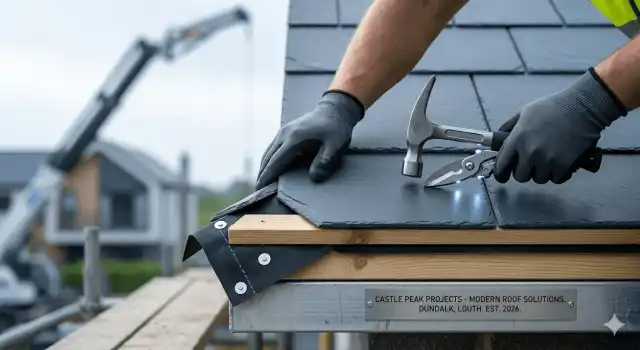
On a natural slate roof, the slate itself can last 100 years or more. What usually fails first is the nails holding the slates in place. Corroded nails cause slates to slip and slide, which is why you see loose slates on older houses. The fix is re-nailing, which costs €2,000–€4,000, not a full replacement at €15,000+. Many slate roofs that get fully replaced do not actually need to be.
Signs your roof is approaching the end of its life
- Widespread cracked or slipping tiles that keep returning
- Water stains on ceilings that grow with every rain shower
- Visible sagging along the ridge line
- Mortar crumbling on the ridge across multiple sections
- The roof is over 40 years old and has never been properly inspected
The 25-year check rule
A useful rule of thumb used by Irish roofers: get a professional inspection at 25 years regardless of how the roof looks from the ground. Many problems are not visible from the street, and catching a failing ridge or rotten timber early saves thousands compared to dealing with it after it causes a leak.
More resources: Repair or replace guide · Signs your roof needs replacing · Roof inspection cost Ireland
Back to the Roof Replacement FAQs hub. Related: How often should you replace a roof?. For a quick estimate, use our free roof cost calculator.
Need a quick number first?
Get your roof replacement estimate
Use the calculator to compare materials, labour, and location uplift before requesting contractor quotes.